
Hooves click against stone, adding to a soft chorus of early-morning birdsong and wind rustling through leaves.
A chestnut horse sways gently as it follows a cracked cobblestone path sprung with soft blades of grass that cascade into the forest beyond.
Its rider is no older than twenty-one. He rests his hands on his legs, holding the horse’s reins loosely as it steadily walks into the growing sunlight.
The forest breaks into a dazzling glen. The rider raises a hand to shield his eyes, and a hedgerow comes into focus. Fluorescent pink, red, and orange flowers burst from among the leaves.
The rider shifts to stand on one stirrup, swings his leg over the horse’s haunches, and drops to stand on the bed of grass. He pats the horse on the nose before pushing open a gate of willow branches twisted around rough dark planks. Slipping through the narrow part in the hedge, he brushes against flowers that leave behind a dusting of yellow pollen.
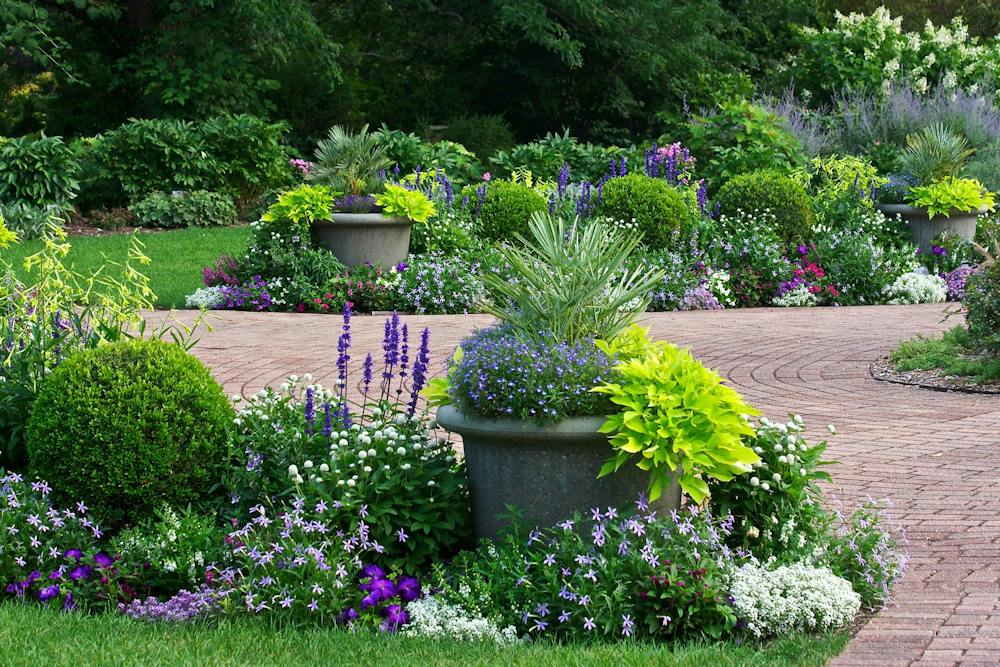
He is careful to step only on the mosaic stepping stones as he approaches a gleaming white metal greenhouse with dark cyan panes of glass. A wild tangle of mismatched plants form a vibrant multicolored groundcover rippling from edge to edge of the hedgerow encircling the garden.
Brown-and-white birds peck at seeds spilled from open flowers. A pair of foxes slink between the shadows of dark red-and-green leopard-spotted bushes. Butterflies flutter under a trellis of dainty hanging purple flowers. Dragonflies zip along the glass mosaic stepping stones. Caterpillars crawl along moss shrouding carved stone statues of men wearing attire from various historical periods.
A shriek sends the birds soaring into the forest.
A girl who appears to be the same age as the boy is running through the garden, heedless of her trampling footfalls, the lace hem of her dress catching on branches and thorns.
She crashes into the boy, throwing her arms around his neck and laughing. Just as quickly, she settles back onto her heels, crushes his hand in her grip, and yanks him toward one corner of the greenhouse. Crouching, she points toward a patch of plants with long, curly green leaves with white skunk stripes. Each plant is shooting out a half dozen yellowish stems with miniature curly-leafed plants on the ends and singular leaves trailing along the stem like spines.
“See those?” She doesn’t wait for a response. “Every leaf there will grow into a spiderette. And then those ones will grow more spiderettes. And then more after that, and— oh, I just wish you could be here to see how many they become!”
He remains quiet as her smile drops and she frowns at the plants, raking her hands through the curly green-and-white leaves. Eventually he asks, “Is there anything else I’ve missed?”
Smiling, she nods, yanks him to his feet, and drags him toward a lattice wrapped in a pink-and-white vine.
✤ ✤ ✤
Pollen showers the boy as he snaps off branches attempting to swallow the gap in the hedge.
A biting autumn wind follows him into the garden. He spots the girl hunching over the leopard plants the foxes nap beneath. Her fingers brush lightly along the length of the leaves. In their wake the leaves stiffen against the breeze and fade to a porous gray, reduced to stone.
The girl scratches something off of a long list. She turns, glances up, and jumps backward. She trips on the now-stone plants but catches her balance before falling. Unphased, she turns back to the boy.
“Perfect! I need help moving some ferns into the greenhouse. You know, the potted ones?” She gestures vaguely into the distance behind her. “I think this is their last year, so they’ll need the permanent paint. I really wish you wouldn’t stay away so long. You know I hate it when you waste time.”
She walks off toward a patch of yellow roses, scribbling something onto her list. He watches her for a while, unmoving, as she methodically reduces vibrant growth to rigid stone, creating her garden of tombstones for the winter.
She glances over her shoulder and, noticing he hasn’t moved, she smiles, waves, and then gestures back in the same direction as before.
He goes to find the ferns.
✤ ✤ ✤
Snow settles like a blanket on the greenhouse before sliding off in heaps onto the gray bushes below. Cool gray stabs through the sheet of white spanning the garden.
The boy and girl sit in the calm warmth of the greenhouse, washed in a soothing dark cyan.
The boy is painting a delicate web of veins onto a stone fern while the girl crushes earthy pigments with a mortar and pestle. She pours in a thick oil, mixing until the powder is imperceptible.
After picking up pots of deep green, purple, and red paint, she moves over to sit next to the boy. She rests a cheek on his shoulder and stares at the fern in front of him.
“Perfect,” she says before straightening and picking up her own brush. She begins dabbing haphazard shades of green onto a frond next to the one he is painting.
Leaning back, she growls in frustration. “Why can’t mine look as lifelike as yours?”
“You have to be observant,” he says. “Each plant is different, even among the same species. You have to pay attention to the way the plant grows its colors. This one always had a blue tint, but that one—” he points at another fern with the end of his brush, “—always looked more yellow.”
He rests his hands in his lap and stares at the dozens of dull gray ferns in front of him, vision blurring.
“They all just looked green and pretty to me,” the girl says, tilting her head and globbing more shades of green onto the fern.
The boy lifts his paint brush and applies a streak of dark blue to the lifeless gray stone in front of him.
✤ ✤ ✤
The boy hunches as he scrapes past rigid spikes of stone branches and flowers, shielding a loosely wrapped package.
He blinks against the rising sun shedding its warmth onto the garden. The sunrise is making it aflame with red, orange, yellow, and purple foliage raging against the stark white greenhouse.
The garden seems alive again as he carefully walks to where a dark wood bench swing sits beneath a latticed arch. Ducking beneath hanging strings of stone flowers, he settles onto the swing. His feet never leaving the ground, he pushes himself back and forth.
He gazes out at the sea of fire until the sun rises higher, the blaze fades to embers, and the embers cool to ashes.
He cannot help but wonder, not for the first time, why she insisted on him never painting the statues in the front garden.
Metal groans as the girl slides the greenhouse door open. She catches a yawn in her hand and stares, smiling, at her dull gray garden. She raises her head and, spotting the boy, starts beaming.
She hurries across the mosaic tiles, afraid to cut her bare feet on her plants. She eyes the mass of gray paper he is holding.
Looking up at his face, she says, “Is that—”
He nods.
She screams in delight and snatches the package from his hands. Ripping off the paper, she finds a dark blue leafy plant. Giddy, she turns and runs back toward the greenhouse. Disregarding her prior caution, she barrels across her stony garden. Instead of causing harm, the stones relax into pliant leaves she crushes under her feet. Warm wind whisks gray powder away from the leaves, revealing vibrant swatches of color.
The boy looks down at the gray paper discarded on the tile at his feet. In her haste, the girl had ripped gory chunks of leaves off her new plant. They lay scattered with the paper.
The girl reaches the greenhouse, haphazardly drops the blue plant outside the sliding door, and turns to run back into her garden.
“It’s spring!” she cries and falls face-first onto a bed of jagged stone foliage that crumples back to life beneath her.
✤ ✤ ✤
They are sitting crosslegged, tending to stalky plants adorned with delicate purple flowers lining the front of the greenhouse. As happened every year, some stalks that had endured years of petrification over the winter were refusing to relax back into living plants. Before breaking away the stubborn gray stalks from amid the rejuvenated purple, the girl touches them, trying to strip away their shell but not succeeding.
“Disappointing,” the girl says as an entire plant refuses to spring back to life. She begins digging it out of the ground to be prepped for permanent paint.
“If you leave them alone next fall they will reseed and sprout in the spring. You would not have the disappointment of some dying,” the boy says without looking up from his task.
“But then they would all actually be dead.” She laughs as she pries the petrified plant out of the ground and hacks away live roots tangled around it. “My stone garden is still alive because it never has the chance to die.”
He sighs sadly. “Just because they have not physically died does not mean they are alive. You might as well allow them to die if you will not or cannot always revive them.”
“No,” she says. “No, I will not allow them to die, and they are not better off dead.” An echo of prior arguments. She drops the stone plant into an ornately carved pot and begins shoveling soil around it. “You see what happens when I let them reach death— they suffer. Death has no haste. It takes its time leeching the life out of them, and they are left brown, and colorless, and brittle.”
“So you make them gray and colorless and rigid? You deprive them of life before death can?” She won’t meet his eye, gripping the carved pot until her knuckles bleed white.
She stands. “I give them eternity,” she says quietly. “I give them their color permanently.”
“You give them painted gravestones.”
Tears water her immortal plant. She opens her mouth to speak, but turns and slams the greenhouse door behind her.
✤ ✤ ✤
The next day is quiet.
He coaxes the foxes back into the garden.
She rejuvenates another quarter of the garden.
He removes the permanent stones.
She sows new seeds in plots vacated by newly permanent stone plants.
He begins painting those stones to be added to the graveyard past the hedgerow.
✤ ✤ ✤
The boy cannot sleep, so he rises from his hammock before the sun kisses the sky. With summer approaching and few new plants to be painted, he will have to return to his life in town until autumn. The girl knows this and has been lamenting the loss of his help for the season. He had taken to reminding her that he would return as always and that it was not yet time. He will make the most out of the time he has left.
The mosaic tiles make themselves known by sparkling with starlight, and he takes extra care not to trample the newly budding foliage. He gathers brushes and jars of paint into a basket. Rounding the back corner of the greenhouse, he pushes open a hidden door in the hedge. The door catches on a yellow flower, raining down soft petals.
Beyond the door is the girl’s graveyard. Separated from the garden by a secondary hedge, a sea of rigid colors stretches into the distance. On first glance it appears to be an extensive and well-groomed garden, but up close it is evident that each plant is painted stone.
Some are painted delicately, passable as real, but most are haphazardly washed in blotchy, inorganic colors. Some are vibrant, others are faded to hardly-recognizable colors.
Hundreds of years of cultivation and preservation stretch beyond view.
Tears push at his eyes as the sun begins to collect in the sky. Gribbing his basket of vibrant colors, he renews his resolve.
Although a futile competition against centuries, he would paint life back into each of the plants she has destroyed “out of love.”
A hand presses against his back, and a chill fights against the warm spring air. A tear breaks from his eye and turns to stone on his cheek.
✤ ✤ ✤
He had thought he was already as cold as was possible, until autumn strode into the garden atop a bitter wind. Hatred roils inside, so hot it is cool to the touch.
Hatred for her, hatred for himself, hatred for his situation.
The rumors about her menagerie were proving to be far more real than he ever could have imagined.
He should never have taken the job. He should not have been so stubborn as to return every year.
It took her three years to admit that her manifestation was stone touch. After another year of prying she also admitted her immortality, but that was just a formality given the rumors he had already known.
By then he had already figured out she was manipulating him, pretending to be his age, pretending to grow with him, pretending to care about her plants’ wellbeing, pretending to be his friend, pretending to understand anything about being alive.
His hatred roils in his stomach, licking frosty flames against his stone shell.
His hatred feeds off of her selfishness: to steal away the life of others, even non-sentient entities, is a harsh theft, and she has incurred significant debt.
Now, he will spend eternity facing his failure and foolishness.
✤ ✤ ✤
“I really do wish you could have seen things the way I do.”
She is digging graves for the past winter’s harvest.
“I mean, it really is a pain doing all this by myself.”
She hefts plants with long curly leaves into the holes. Messy strokes of green and white run the length of each leaf.
“It’s funny.” She chuckles, out of breath. “Six centuries. I did this alone for just short of six centuries. But six years of help made me forget.” She scoffs. “You could have at least let me forget for another dozen.”
It takes her another hour to speak again.
“I always knew you would leave one day. You never kept it a secret that you look down on me and my garden.” She stops and looks up at him. “Honestly, I am surprised you came back every year.” She turns back to her work. “But I could just tell that this year would be your last. I could just tell.”
She stands and turns to leave. “Perhaps a century or two will change your mind.”
✤ ✤ ✤
The girl only enters the graveyard in the spring. He suspects it is because, despite her own insistence that she loves her stone garden, she inwardly recognizes that she should feel shame.
He is not sure which is more tortuous: spending three seasons of every year in isolation with an abomination, or spending spring with the person who perpetuates its existence.
His most vivid work stares back at him, and he can nearly hear the plants whisper ‘thank you’ on the wind, but by the year the ones he had a hand in painting are crowded out by those with sloppily applied paint in all the wrong shades.
Though he stands rigid and unmoving, the plants seem to grow further and further away as the years pass and the graveyard extends into the distance. Few of the plants he infused with lifelike color are yet visible.
He can do nothing but stare forward. Dry tears push at his eyes and itch down his cheeks. Rain soothes the impossibility of emotion, but it also accompanies spring.
She does not stop talking when she visits.
“I wish you could see the garden now,” she says.
“I wish you were here to help,” she says.
“I wish you could still make them look real,” she says.
“I hate that you made me turn you to stone,” she says.
“I miss you,” she says.
“I do not want to be alone,” she says.
Years of spring pass, and she does not come back.
Counting the years stops mattering to him after one-hundred.
✤ ✤ ✤
“How could you force me to preserve you, but in so doing condemn me to solitude?”
The first words he has heard in perhaps decades.
He wants to ask her if she still thinks he is alive.
✤ ✤ ✤
The last of his plants is invisible in the distance.
He is beginning to understand the girl’s need for permanence for things she loves.


