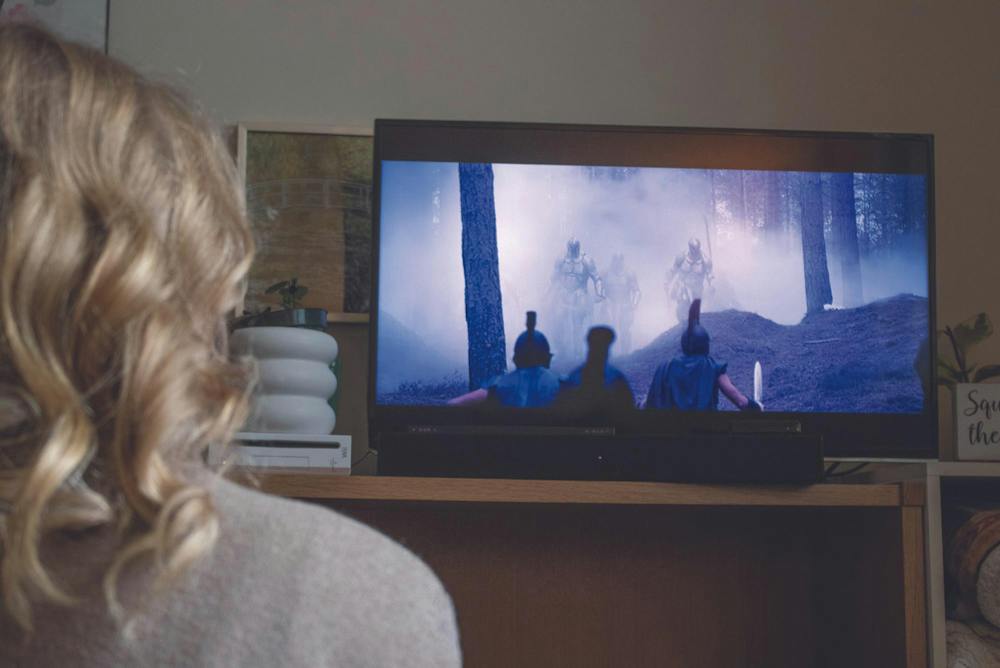
Once considered a dreaded required reading by many, “The Odyssey” took on new life and won over millions of viewers when the fantasy film of the same name hit theaters July 17.
Christopher Nolan fans, Tom Holland/Zendaya shippers, literature lovers and film buffs alike packed theaters for weeks on end to see the approximately three-hour-long film.
After just three weeks in theaters, the film had surpassed $1 billion in global ticket sales, according to Variety. This feat took place even before the movie’s debut in China, which has the second-largest movie-going market. “The Odyssey” is now Nolan’s highest-grossing film.
Considering the notability of its director, its massive budget, its use of new advanced film equipment and its star-studded cast, the film appeared destined for greatness.
“The Odyssey” was the first ever film to be shot completely on 70 mm IMAX film, which offers up to three times higher image quality than digital cameras, according to CBS News.
IMAX worked with Nolan’s team to overcome the technical obstacles which came with shooting entirely on IMAX film. For example, the cameras that use this type of film are loud, which interferes with shooting scenes.
Matt Damon, who plays Odysseus in the film, told journalist Scott Pelley about how IMAX partnered with the film to create a special housing for the camera. The housing helped muffle the noise of the camera.
Innovations like these allowed audiences to view the Trojan deception, the escape from Polyphemus and the standoff between Odysseus and the suitors — all in the crispest image quality yet.
Furthermore, each scene demanded viewers’ attention through gripping performances by actors including Damon, Anne Hathaway, Robert Pattinson, Tom Holland, Zendaya and John Lequizamo.
Yet, perhaps the genius of the film was found less in the movie magic and more in the nearly 2,700-year-old story itself.
“The Odyssey” takes place following the Trojan War and follows Odysseus, king of Ithaca, on his journey back home, including the various obstacles he faces on the way. His crew stares down a cyclops, the sorceress Circe, the luring song of the sirens and more. Back at home, Penelope, wife of Odysseus, faithfully awaits his return while she and her son, Telemachus, also struggle to fend off invading suitors.
Below the surface, however, “The Odyssey” is a story of a flawed leader who has pulled off a massive war victory yet is struggling with the moral costs.
In perhaps one of the most gripping scenes of the three-hour film, Odysseus has made it back to Ithaca but maintains his disguise as a beggar to avoid attack from Penelope’s suitors. Penelope calls “the beggar” to her and asks him if he knew her husband, expressing her longing for his return.
In response, he asks a series of wrenching questions as graphic scenes of the Trojan War flash through his mind:
“What if the Odysseus you knew lost his way? What if ... one night, in a strange city, he saw things that made him think the home he knew couldn’t possibly be there anymore. What if ... when he left the belly of the horse, and opened the gates of Troy, he saw ten years of rage pour into that city in one night? We left them a gift, an offering of peace, that they took into their home. We violated all that’s ever sacred between people. It turned a fight into a hunt. To burn the walls of Troy was to burn the world entire, including his home. What if he knew, that very night, as he walked through fires, anarchy and pain — and, in a daze of sweaty celebrations that follow, what if he knew exactly what he’d done?”
This scene sealed the film as something much deeper than a mere fantasy tale. It proved the story did not provide mere entertainment, but served to reflect true complexity — the main character struggling with the highs of success and the torment of what the victory cost.
Odysseus’ brief monologue was reminiscent of the opening lines of the source material, Homer’s classic Greek poem:
“Sing to me of the man, Muse, the man of twists and turns, driven time and again off course, once he had plundered the hallowed heights of Troy.”
The premier technology and A-list acting may have attracted millions to the theater, but the classic story of grief and resilience made the lasting impact on moviegoers.