
Technique. Precision. Emotion.
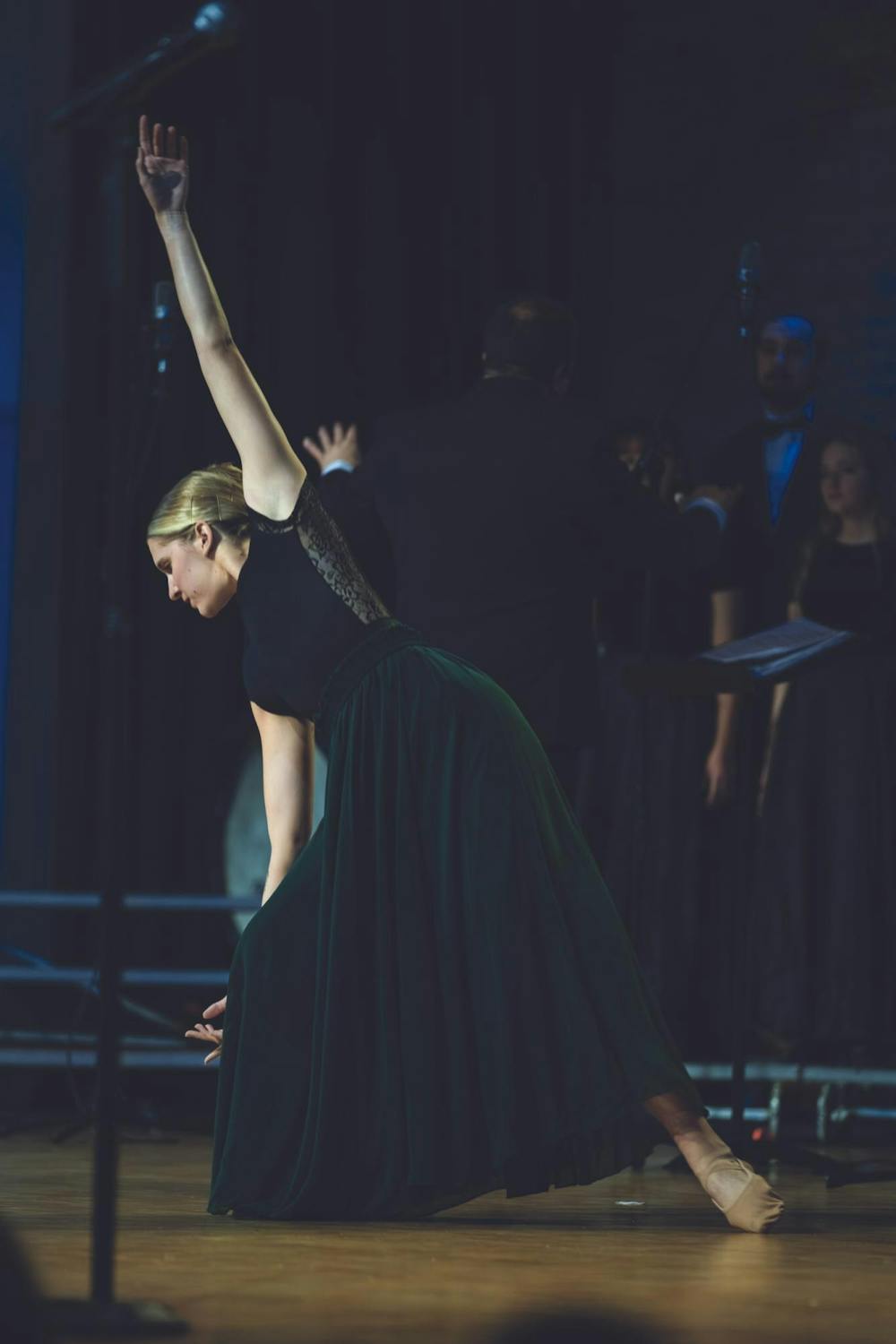
As dancers prepare for the faculty- and student-led dance concert May 1-3, they enter two different worlds: one founded on faculty expertise, and another born of the raw narrative of a graduating senior.
The first act of the evening highlights the guidance of faculty and guest artists, led by Amanda Browning, adjunct instructor of dance, with works featuring choreography from Brandon Welch, a Colorado-based teaching artist who worked with dancers over J-Term.
This half offers a space for dancers with backgrounds ranging from formal ballet training to contemporary and jazz, Hanna Fritz, senior creative writing major, said. It allows for storytelling through varied lenses and styles of dance, including a 14-minute modern piece and an excerpt from the classical ballet “Giselle.”
While the first act focuses on a high technical skill and brings a vision set by faculty to life, the second act transitions into a deeply personal senior capstone created by Grace Anne Crews, a senior theatre arts major.
Crews seeks to craft a story that is both specific to her life and experiences as well as one that is universal, examining the process of healing and brokenness that many can relate to. The music selection in this half of the concert is intentionally eclectic, Crews said. It features artists such as Noah Kahan and Taylor Swift and songs from the musical “Next to Normal.”
“I really wanted to create something that people knew about and have experienced in their life, but that hasn’t necessarily been told in this format before, or been told at all, really,” she said. “People don’t talk about how hard it is to heal from something that was really traumatic for them.”
This half of the concert program consists of 11 female student dancers who have collaborated closely with Crews and her co-choreographers, Hanna Fritz and Shelby Stickels. Some dancers take part in both halves of the concert, including Emma Scarborough, a sophomore film and media major.
Rehearsals have been upbeat and highly collaborative, even amidst the heavier topics that are being discussed, Scarborough said. Working on these pieces offers a deeper emotional connection as performers are tasked with bringing the stories and feelings of their peers to life, she said.
“With any choreographed piece, you get to see a piece of somebody’s heart and mind, especially when they’re telling a personal story,” Scarborough said. “That’s been really awesome to see a piece of them.”
The theme connecting the two halves of this performance is the exploration of relationships with others, communities, and oneself. One piece reflects on the rebuilding of community following the Blitz in England, and another features the song “i am not who i once was,” by Chance Peña, which focuses on the story of the prodigal son.
This spiritual thread weaves through the entire program as the dancers use their bodies as a means of expressing a want for connection and meaning.
As dancers, the creation of something out of nothing provides a direct link between their faith and their performance, and it mirrors their relationship with God while onstage, Fritz said.
“We’re all longing for a relationship with God, whether we know it or not, and so all of the moments of brokenness, all the moments of connection with other people, are really just a taste of the greater longing we have for God,” she said.
By combining the work of professionals with deeply creative student work, this is an opportunity for dancers to grow in both their technical ability and emotional range.
Whether in a classical ballet suite or a modern story of healing, the production highlights the power of dance to communicate more than words ever could, Crews said.
“Dance, like any other art form, is subjective, and if you like it or not,” Scarborough said. “But I also think that dance is very powerful, and it can allow you to see things and think about things that you wouldn’t have before.”


