
The walls and windows in the Euler Science complex will soon be echoing with distinctly Middle Eastern musical rhythms and melodies.
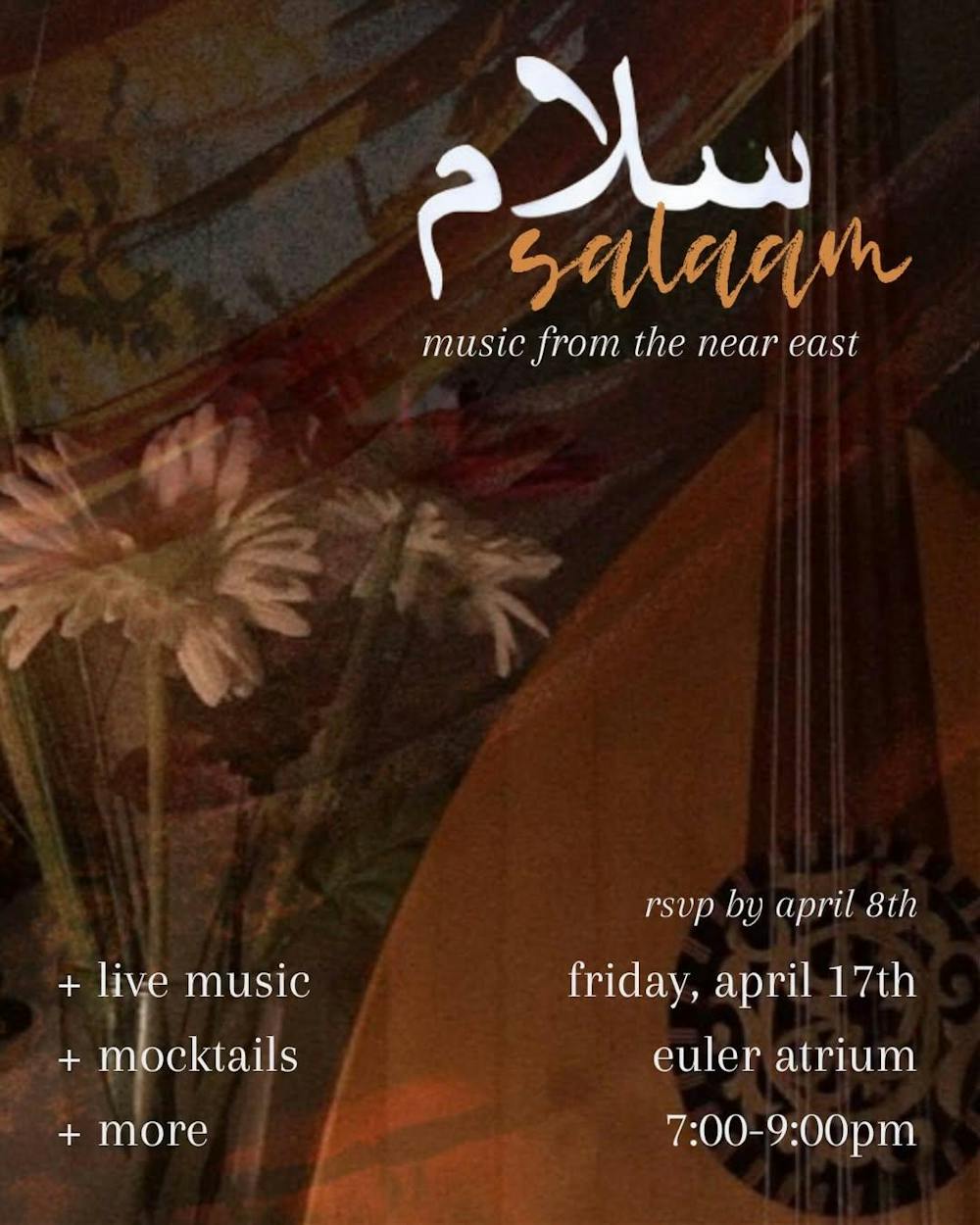
Taylor University’s Middle Eastern Collegiate Association (MECA) will be hosting Salaam, a four-member band based out of Indianapolis that has created and performed Middle Eastern music since the 1990s. The event—titled “Salaam: Music from the Near East” will take place in the atrium at 7 p.m. on April 17.
The concert will be an unparalleled event for the cabinet—and may possibly be the most unique one on campus this spring, Hadleigh Brown, a junior social studies education major and co-president of MECA, said. Salaam’s band members come from diverse backgrounds, and their discography spans a variety of areas in the Middle East, from Lebanese and Egyptian tunes to Palestinian and Turkish songs, among others.
MECA had originally planned on hosting an upcoming Passover event before Brown asked them to consider putting on a concert. The cabinet had struggled with producing events that could be easily repeatable but also deeply meaningful for the culture that is being celebrated and for those that are attending, she said.
“Sometimes it can be really hard if you have a very specific, intimate tradition—that can be hard to materialize for all of campus,” Brown said.
Brown became inspired to research Middle Eastern bands in the Midwest area after noticing that students would stop by MECA’s mint tea events in the Office of Intercultural Programs’ office because of their curiosity about the music that was being played. She and her cabinet see the concert as being an opportunity for students to get a taste of the Middle East in more of an experiential way than the mint teas could provide.
After reaching out to the band, Brown and her co-president Joshua Wilson, a junior communication major, had a conversation over Zoom with founder Dena El Saffar. They discovered that she possessed the unique knack of providing an educational element with her own mission behind the band and familiarity with teaching at universities.
Saffar formed the band after the Gulf War, naming it “Salaam,” which is Arabic for "peace." She felt that it was important to express a unifying sentiment and shed light on what the Middle East has to offer besides war and oil, Brown said. She believes that the event will have the potential to showcase the Middle East in a way that could stimulate unique and constructive conversations.
“I think this event can really articulate the holistic part of the Middle East that would be really hard to do with a traditional holiday,” Brown said.
The concert will have a semi-formal dress code, with a photo booth and mocktails. Attendees can expect a concert with several breaks in it to create room for conversations, in an effort to bridge the gap between listening and learning, Brown said. As part of this, Brown and Wilson plan on holding time for an informative discussion with Saffar.
Brown is hopeful that attendees will feel refreshed and experience a lingering feeling of openness towards their understanding of music and Eastern cultures. She anticipates that this event will be a repeatable one, creating a special connection between Indiana University, Salaam, the Middle East, and Taylor University.
“I want (attendees) to be filled with the spirit of peace, which ultimately comes from our Heavenly Father but I think can be articulated through Middle Eastern music,” Brown said.


