
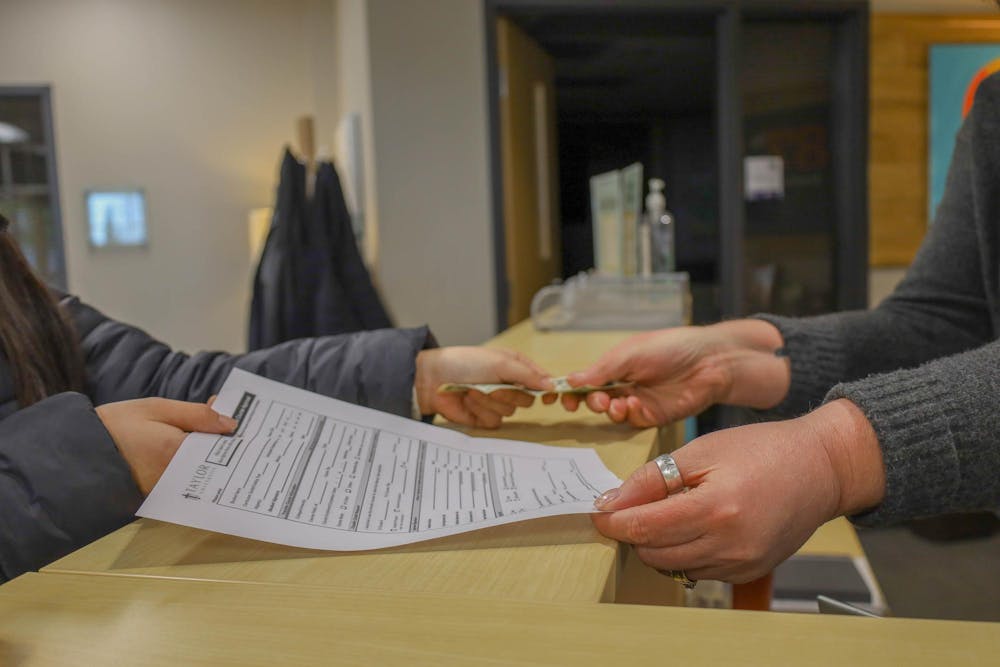
Taylor University’s updated deposit policy requires admitted students to put more “skin in the game” to save their spot in the incoming class, Holly Whitby, vice president for Enrollment and Marketing, said.
During the summer of 2025, the Admissions Department changed the policy by increasing the deposit to $300 and making it nonrefundable with the endorsement of Taylor leadership.
The university’s original policy was a $200 deposit refundable until May 1 — national college decision day — for students wanting to hold their spot in the incoming class, she said.
“Historically, many schools have had a deposit,” Whitby said. “That's the way you basically reserve your spot in the incoming cohort and let them know that you're coming, so that you're invited to summer orientation or so that you secure your housing.”
Taylor’s housing situation last summer played a big role in the policy change, she explained.
The influx of incoming freshmen prompted the university to acquire more housing such as The Flats and The Haven. However, though the administration found beds for every student this year, they wanted to avoid another strain on available housing for the summer of 2026.
“What we decided was that we wanted to have families have more skin in the game before we give them housing,” Whitby said. “Because when you (place) your deposit, we start putting you in the queue for housing.”
When deposits are non-refundable, students typically deposit at multiple schools to keep their options open while they make their decision, she explained. While this policy gives students more flexibility as they select their school, it can create difficulties for universities wanting an accurate picture of the upcoming academic year.
By establishing this policy, the Admissions Department wanted to ensure depositors were committed to attending Taylor, giving current students and the housing department more wiggle room.
Nearby neighbors of Taylor University, such as Indiana Wesleyan University and Huntington University, mirror Taylor’s previous deposit requirement: a $200 deposit, refundable until May 1.
However, the university is not alone in this enrollment deposit policy, Whitby said.
Purdue University in West Lafayette, Indiana, requires accepted students to pay a nonrefundable $500 deposit before May 1, Purdue’s admissions page reported. Samford University in Homewood, Alabama, also asks students for a $300 nonrefundable deposit to hold their place at the university, Samford’s website stated.
The change was not made lightly, Whitby added.
“We talked to some of the peer schools that have moved in that direction about it,” she said. “We saw other schools that were more (selective) schools that were already doing it. So we talked to them about their journey and changing. And we felt really good … that we were at a point where we needed to do that as well.”
The policy change will also benefit the registrar’s office, Angi Long, Taylor University registrar, said.
The registrar interacts with students at all stages of recruitment, from prospective to admitted.
“When someone makes a deposit, they come on our radar as ‘this person is coming to Taylor in the fall,’” Long said.
After a student deposits at the university, the registrar begins to post their approved transfer credits, enter their grades and run their degree audit, Long said.
Starting May 1, the registrar creates schedules for the incoming freshmen. The department typically builds each student’s schedule 1.75 times due to changes in their major(s) and minor(s), Long explained.
However, every year, the university experiences a “melt” where students who have deposited to Taylor pull out of attending the university. Before May 1, students pull out and receive a $200 refund, but after May 1, students simply walk away from the $200.
These students abandon more than a chunk of change. They also leave behind a personalized class schedule and transcript the registrar invested significant time to create for them.
“We have probably spent on that one student (who pulls out) easily 10 hours just in our office,” Long said.
According to Whitby, the policy change is already producing results.
“Our deposits year over year are less than last year, because people have to put more skin in the game, so they're being more careful about depositing,” Whitby said. “But it also has translated to our melts, or our canceled deposits, being half of what they were last year.”
This reduction in student “melt” saves the registrar a lot of time and effort, Long said. With a more accurate idea of the incoming class, the university can plan the appropriate number of courses and reserve the correct number of seats for the upcoming academic year.
To date, the university has received no backlash from the decision, Whitby said. She attributed this response to the university’s transparency on the policy change. Taylor admissions counselors ensure families exploring the university understand the policy and advise them not to make their deposit unless they are sure about their choice.
Overall, Long called the policy a win for her department.
“If I’m not spinning my wheels, helping students that had no intention of coming, then I have more energy to spend for current students,” Long said. “ ... Over the summer, we give so many hours to prospective students that maybe this would free us up to have more time to benefit the whole campus community.”


