
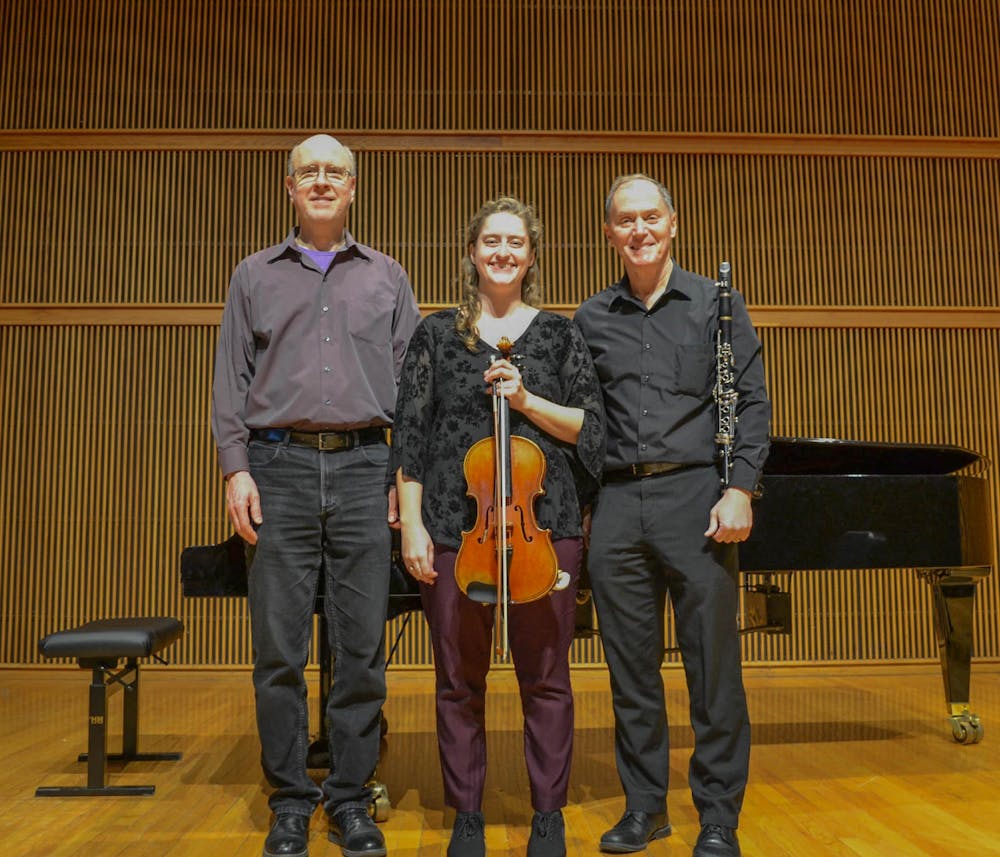
Three music faculty members portrayed a variety of emotions through their faculty recital in Butz-Carruth Recital Hall on Feb. 22.
Initially set to be a Valentine’s Day concert, Leon Harshenin, professor of music and coordinator of piano studies, selected music revolving around the classic tale of Romeo and Juliet. The program was built around romantic music, he said.
“Anyone who knows the story of Romeo and Juliet knows that there’s beauty, passion, heartbreak, pain, all within the one story,” Melissa Knutson, adjunct instructor of piano, said. Knutson played viola in the recital.
To offer a brief reprieve from the darker moods of the more romantic pieces, Knutson and Christopher Bade, professor of music and director of the Wind Ensemble and Symphony Orchestra, performed a piece called “Spring Forth in Joy” by Dominic Dousa, Knutson said.
It was peppy rather than romantic, offering a break from the heaviness of other romantic pieces, Harshenin said.
“It’s exploring all sorts of different aspects of joy, joyfulness, the feeling, the places we may walk through to discover it,” Knutson said. “There’s some darker places, but you come through them and you find a renewed purpose. There’s a lot about the human experience encapsulated in all the pieces we’re playing.”
Other selections also played with themes of human experiences and emotions, Knutson said.
These themes were most prominent in the selection of four pieces from a collection of eight by composer Max Bruch, performed by all three professors.
“The first movement we’re doing is beauty and yet loss,” Knutson said. “Sadness, and at the same time, meaning.”
The second movement returned to themes of falling in love and feeling the height of such a beautiful and powerful experience, she said.
The third movement then explored playfulness and childlike excitement, she said, while the fourth movement demonstrated longing and wistful passion while making forward progress.
“I really enjoy getting to go and just experiencing different kinds of music and hearing what my professors have been working on, and I think they have a lot of skill and a lot of experience that shows in their music,” Sophie Sterken, a sophomore music major, said.
Besides the variety in subject matter of the pieces performed for this recital, there was also diversity brought by different combinations of professors performing each piece.
Some of the pieces selected for this recital were solos. One such piece, originally written for orchestra but now transcribed for piano, posed a unique challenge for Harshenin.
“The piano is just playing all the different instruments, sometimes at once,” he said, “So there are a lot of notes and a lot of melodies, sometimes even in the middle of the texture.”
The professors also performed many joint pieces. For these, they practiced their parts individually before meshing them together in January, Knutson said.
This process requires musicians to get on the same page by using body language during joint rehearsals to meet the pushes, pulls and timing of pieces, she said.
“It’s always enjoyable to play with other musicians. Especially for pianists, who often practice alone in a practice room and then get up on stage alone,” Harshenin said.
Playing chamber music is a delight because of interactions with fellow musicians, he said.
Playing songs with others also provides opportunities to develop ideas and bounce them off one another, Knutson said.
As a TU alumna-turned-professor, Knutson brought a unique perspective to the concert. She has been both in the audience hearing Bade and Harshenin perform and onstage alongside them.
“I remember watching Dr. Bade play. He’ll take a note, that on paper is incredibly simple, and he’ll make a whole story,” she said. “It’s been a really good growth experience playing alongside them. I’m starting to see the opportunities for the story inside of one note.”


