
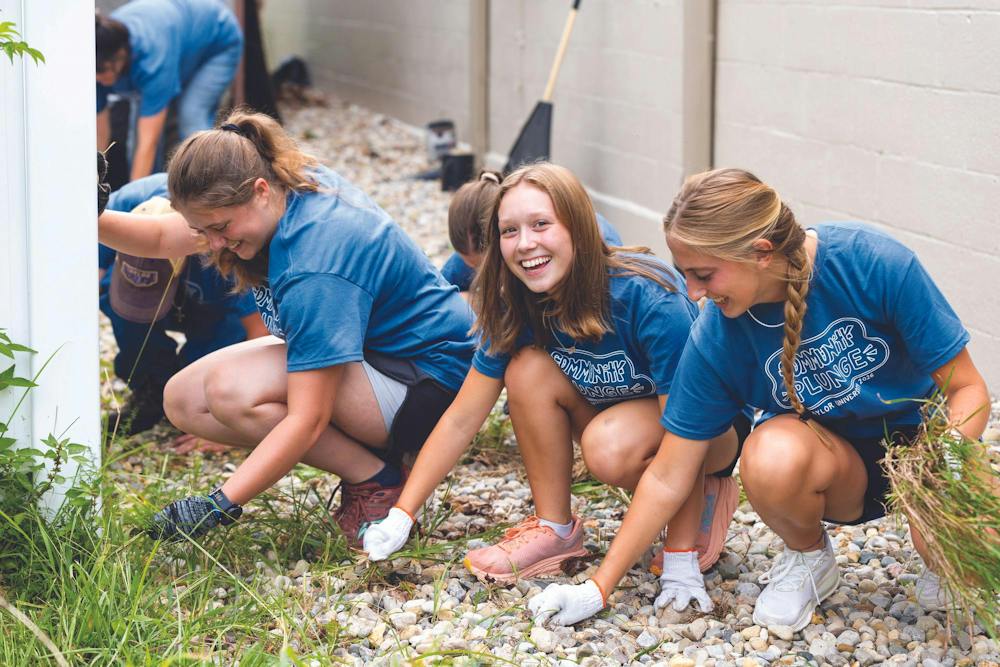
For the third year in a row, Taylor University has been recognized as one of the best colleges in the U.S. by The Princeton Review in their “The Best 392 Colleges: 2027 Edition.” Out of 50 categories from this guide, Taylor ranked third in the nation for Friendliest Students and fourth for Happiest Students.
The Princeton Review’s report is based on the information students attending these 392 colleges provide about their school. It includes experiences and opinions collected in a 98-question survey Taylor students took.
Across the United States, 172,000 students from different colleges answered questions about their experience within higher education. Questions pertained to four different categories: their school’s academics/administration, life at their college, their fellow students and their personal experience.
“Similar to a GPA, it is a metric that provides us with a numerical base to compare student opinions from college to college—apples to apples, as it were,” the Princeton Review’s website said. “Using these scores, which we compute out to several percentage points, we are able to tally our ranked lists.”
Each college is scored for its students’ answers to each question. The more unified students are on aspects of their school, the more likely they are to place in one of the top 50 categories.
The Princeton Review rankings simply affirm a genuine desire from students to be at Taylor University, said Skip Trudeau, Taylor University’s vice president for student development, intercollegiate athletics and director of the Master of Arts in Higher Education program.
“It meets my perception of Taylor students,” Trudeau said. “We get students who really want to be here. They buy in.”
The external results of “happiest students” reflects, internally, a vibrant campus community, he said. Institutionally, he said the faculty and staff have generally encouraged an integration of faith and learning through the classroom and a liberal arts education perspective.
Learning from faculty through their community engagement is another unique opportunity students have at Taylor, Trudeau said. This includes events like Community Plunge, which gives incoming students the opportunity to see their professors serving alongside them.
“It is one thing to see your history professor, and he teaches your class,” he said. “But then you go and serve with him and see him in a different light.”
As Taylor’s incoming class sizes grow each year and new buildings are constructed on campus, leadership has intentionally continued cultivating the same atmosphere the university has historically encouraged, Trudeau said
Through different aspects of a growth across campus, Trudeau said they have been intentional to continue the Taylor ethos through purposeful planning of new buildings such as the new chapel and Paul and Barbara Gentile Hall.
“Nobody is building massive chapels to fit one whole community together,” he said. “That is just so Taylor. So, as we have grown, quite frankly, from a financial standpoint, you do not do these kinds of things, but we do. We are very committed to serving a broader student body as much as we can, but we want to do it in a very ‘Taylor’ way.”


