
The Trojan Cup is back for its second appearance at Taylor.
Lextin Willis, senior sport management major and founder of the event, said the Sport Management Club wants Trojan Cup to return as an annual event each year.
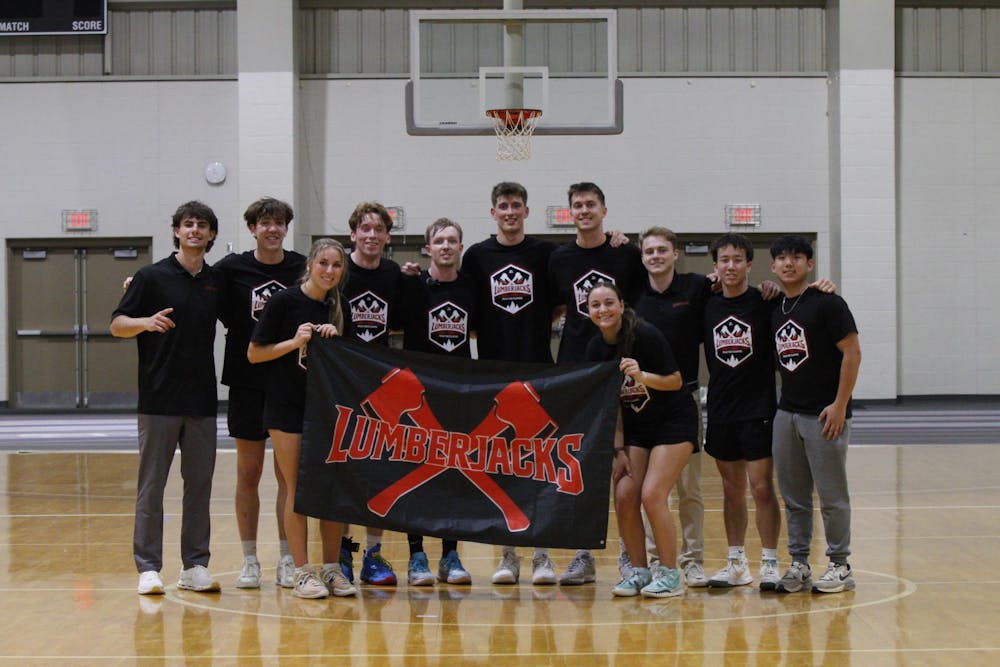
The competition started on April 14, featuring five teams once again. The Silent Knights, Waikiki Warriors and TU Tornados are returning teams, while the Lumberjacks and the Reade Avenue Wranglers made their debut.
Each team has a roster between 19-35 participants, with athletes recruited by management and marketing leadership.
Willis said he thinks of the event in two stages: preparation and competition.
The preparation stage consists of recruiting. Each team has a manager that gathers their athletes through offering a percentage of the potential $500 prize fund and sponsorship benefits.
Anyone involved in Taylor’s community can be recruited.
For example, Matthew Renfrow, dean of natural and applied sciences, plays for the Tornados. Caleb Hodgson ‘25, Taylor basketball alumnus, plays for the Silent Knights. However, only undergraduates can be managers.
“They (managers) go out, and they actually recruit people,” Willis said. “But they gotta watch budget. They can write clauses and bonuses and things like that to incentivize people to join their team.”
Willis said budgeting in recruitment is a major skill managers learn through the competition. The returning teams have a leg up regarding financial decisions, as some of them are using the same jerseys and sponsors as last year.
The competition stage consists of athletic games, team challenges and head-to-head challenges.
Volleyball, basketball and soccer games happen three times over the four-week rivalry.
Participants mentioned their skills and the areas they believed they could contribute to on free agent recruiting forms.
Now finished with her season, senior volleyball player Lindsay Springer joined the Silent Knights after mentioning her area of expertise. Because of her specialty in the sport, she enjoys participating in the volleyball competitions.
The Silent Knights and Tornados rivaled on Wednesday, April 29 for a three-set matchup. The Tornados took the first set 25-21, dropping the second 25-15, before coming out on top 16-14 in the third. Benjamin Hewitt highlighted the game with 10 kills and 29 digs.
“It felt so real to me,” Springer said. “I felt like we were right back in the season.”
Trojan Cup also offered Springer her first opportunity to play co-ed volleyball, which she said was a fun experience.
There are three team challenges, consisting of a speed, skill and strength day. During the speed event, athletes participated in swimming, biking and running relays.
Some roster athletes compete across the board, especially within the team challenges. Joey Mikel, freshman accounting and finance major, is not only the Lumberjack’s manager, but also a participant in their competitions. He ran in the 4x200-meter relay, contributing to their first place finish.
The Lumberjacks almost swept the speed competitions, earning first in the 3x100-meter swim relay and second in the bike race.
Head-to-head challenges are scheduled by the teams themselves.
“On Sundays, based on the standings of the league the week before, we challenge each other,” Mikel said.
The challenges can be men’s, women’s or co-ed pickleball, spike ball or disc golf, Mikel said.
After week three, the Silent Knights sit at first place with 52,000 points, followed by a close run for second by the Lumberjacks (41,000), Waikiki Warriors (37,000) and the TU Tornados (35,000).
Each team can be followed on Instagram for highlight reels and updates on the commencement banquet taking place on May 9 in Habecker Hall, where the second ever Trojan Cup will be presented to the winner.
The banquet follows a marketing competition between the teams, where they present their sponsorship, operations and media to judges. 40% of a team’s points comes from the judges’ scores, while the other 60% comes from points earned from the athletic events.
Regardless of the results, Mikel said he finds great accomplishment in knowing that participants from across campus have come together, meeting people they wouldn’t have without the competition.


